


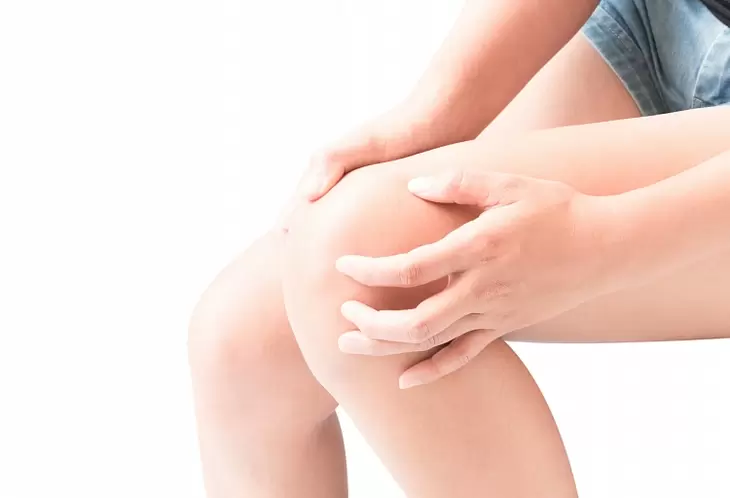
Knee pain is a common symptom that every person experiences at least once.It can be once in nature and occur after injuries, overloads or unsuccessful movements.Less often, it is pathological, caused by inflammatory, degenerative and dystrophic processes in the knee joint, knee ligaments, adjacent bones or surrounding soft tissues.
The intensity and nature of the pain can vary: from minor discomfort to debilitating, burning, sharp or cutting pain.Often, pain is accompanied by additional symptoms - swelling of soft tissues, local increase in skin temperature, redness and swelling.If pain in the knee area bothers you periodically or for more than 1-2 days, do not ignore the symptoms and seek help from a doctor.An orthopedist or traumatologist will perform a diagnosis, determine the causes of pain and choose the appropriate course of treatment.
Causes of knee pain
- Bruises after falling on the knees or blows, in which the exudate accumulates outside the joint capsule or in it, and the skin quickly acquires a characteristic reddish-blue shade;
- sprain caused by excessive tension - with damage to muscles, ligaments, synovial bursa, popliteal muscle - is accompanied by accumulation of exudate and often instability in the knee joint;
- partial avulsion or complete rupture of ligaments as a result of strong external force, which is accompanied by prolonged loss of stability and significant functional limitations in the limb
- A meniscus tear is the result of simultaneous bending and twisting of the knee, when the meniscus is partially or completely detached from the tibia;
- rupture of the cruciate ligaments, most often occurring during braking movements;
- primary osteoarthritis - pathological wear and tear of articular cartilage, which loses elasticity and provokes increased friction in the joints and constant pain in the knee area;
- rheumatoid arthritis is an autoimmune disease in which immune cells attack the synovial membrane, gradually destroying the articular cartilage and connective tissue;
- Patellofemoral pain syndrome is pain in the knee joint, in the front, which develops as a result of excessive loads and is not accompanied by any structural changes.
Types of knee pain
Painful sensations in the knees are divided into several groups according to the following criteria:
Because of the occurrence
- Physiological - the body's natural reaction to long periods of standing, sitting or in an uncomfortable position;
- traumatic - the result of damage to the knee joint itself and adjacent tissues;
- pathological - a consequence of inflammation of the knee joint, dystrophic or degenerative processes in it.
By frequency
- Once - more often they are physiological in nature, not intense and go away on their own within a few minutes or hours;
- periodic - associated with regularly repeated loads, for example, in professional athletes or recurrent diseases such as rheumatoid arthritis;
- chronic - they constantly bother a person, most often occur with joint pathology and can intensify as the disease progresses.
According to the time of occurrence
- Occurs only after exercise, for example, when walking or sitting;
- worse after attempting to step;
- constantly disturbing, regardless of physical activity and stress on the injured leg.
Diagnostic methods
When a patient complains of knee pain, the doctor writes down the symptoms, specifies when the pain started, what injuries and other factors preceded its development.To limit the list of suspected joint lesions and diseases, he performs a palpation examination and checks mobility during tests.A specialist makes an accurate diagnosis after blood tests and diagnostic equipment, for example, radiography or magnetic resonance imaging:
Which doctor should I contact?
To diagnose the cause of knee pain, visit a rheumatologist or orthopedist.If the pain syndrome was preceded by an injury, make an appointment with a traumatologist.Depending on the accompanying symptoms, consultation with a surgeon and neurologist may be necessary.
Treatment for knee pain
The course of treatment for painful knees depends on their causes.Minor bruises and sprains are treated with rest and the use of local warming and healing ointments.For more serious injuries, it may be necessary to immobilize the limb using an orthosis or cast: in such cases, to get rid of the pain, the patient is prescribed analgesics in tablets or injections.Treatment of joint diseases is carried out comprehensively, using anti-inflammatory drugs, chondroprotective drugs and physiotherapeutic procedures.
The consequences
After injury, the prognosis depends on the severity of the injury.As a rule, healing from bruises and sprains takes up to 1-2 weeks.Rehabilitation after ligament rupture takes longer;The most unfavorable prognosis for a meniscus fracture is that the instability of the knee joint can continue for a long time.
Joint diseases without timely treatment provoke their gradual destruction, deformation and loss of mobility.Often the changes are irreversible and if the treatment is not started in time, the normal functioning of the joint cannot be restored.
Prevention of knee pain
- Do regular warm-ups if you stand for a long time or sit in an uncomfortable position;
- avoid knee overloads and injuries;
- avoid hypothermia, wear warm pants in winter;
- eat more foods with vitamin D and phosphorus;
- regularly undergo scheduled medical examinations with an orthopedist and do not cause any degenerative and inflammatory processes in the knee joint.